
Vertical Storytelling Starter Kit
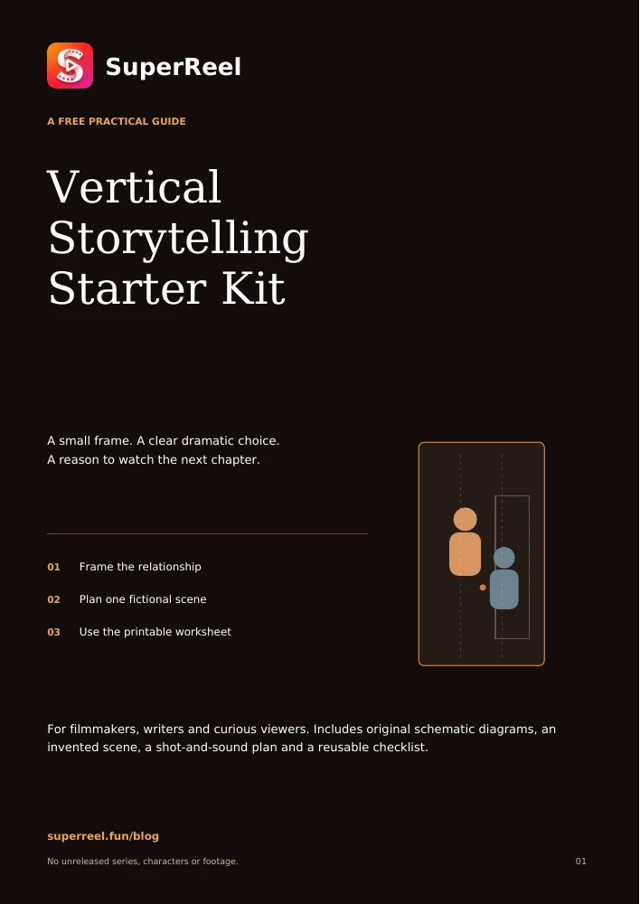
A small frame. A clear dramatic choice. A reason to watch the next chapter.
Plan one readable short drama scene with original framing diagrams, a fictional example and a printable worksheet. For filmmakers, writers and curious viewers.
Download the free kitPDF · 7 pages · About 635 KB · No email required
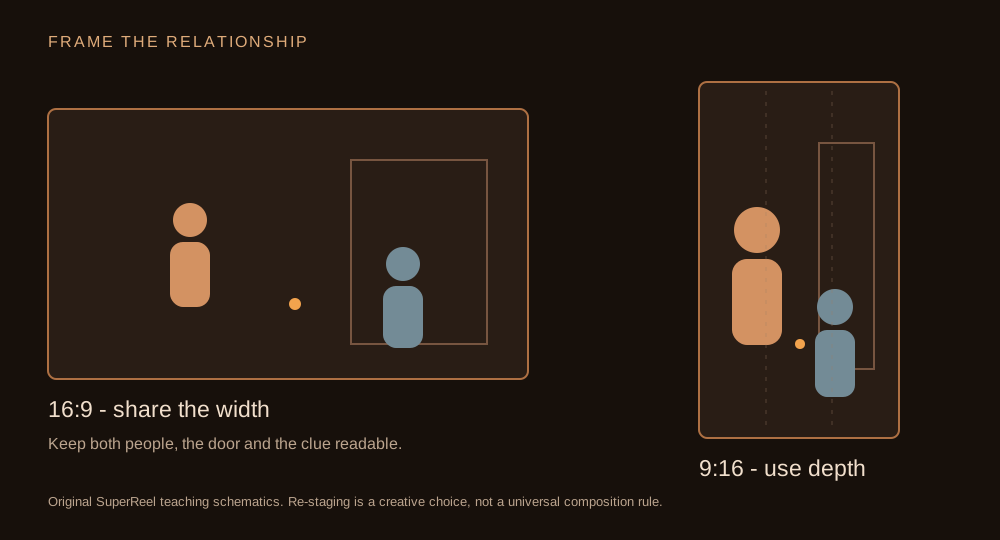
Compose for the information.
A vertical drama is built for an upright frame. The useful question is what the viewer needs to notice, and when. A narrow crop can remove a hand, a second person or the doorway that explains the scene. Start by choosing the emotional subject, then place the next important clue where the viewer can read it.
- Choose one point of attention. An expression, a hand or a threshold can lead the moment. Let the rest support it.
- Use depth with intention. A person in front and a door behind can create a relationship without forcing both faces into a tight two-shot.
- Check the actual phone view. Keep meaningful action clear of captions and interface overlays. Their positions vary by platform and device; test the intended destination.
The examples use the common 9:16 portrait ratio. Vertical work can use other ratios. Our guide to vertical drama explores how the frame shapes the viewing experience.
One scene. A changing relationship.
“The spare key” is an invented teaching exercise. It is not a SuperReel series, pilot or production announcement.
SETUPEvening. Asha is closing a small tailoring shop. Her brother Leo arrives at the glass door with an old brass key in his right palm.
LEOBefore you ask, I didn’t take it. Mum left it in my coat, with a note saying you’d know which door it opens.
ASHAShe hasn’t called me in twelve years. Why would she send me a key now, through you?
LEOBecause I said you’d still let me in.
ACTIONAsha lets him enter. He passes the key from his right hand to her left. A latch clicks behind the closed fitting-room door. Leo looks toward it before Asha does.
A VOICE, FROM INSIDEAsk him what he opened.
CUTAsha looks back at Leo. This time she closes her hand around the key.
Four shots that each do a job.
This is one possible coverage plan. Shot count and runtime are creative choices, not rules for the format.
At the threshold
Picture: Hold Asha near the foreground; show Leo through the glass. Let his open hand enter the lower-middle frame.
Dramatic job: Establish who controls entry.
Sound: Interior room tone, distant traffic, a knock.
A natural exchange
Picture: Move inside with them. Keep the fitting-room door readable behind Leo while the dialogue develops.
Dramatic job: Connect the brother to the door before the audience knows why.
Sound: Continue the same room tone. Let pauses remain audible.
The handoff
Picture: Show the key leave Leo’s right palm and arrive in Asha’s left hand. Keep the screen direction consistent.
Dramatic job: Make the object transfer unambiguous.
Sound: One restrained key sound; cloth movement.
The changed look
Picture: Return to Asha and Leo with the closed door in context. The latch clicks; Leo looks first; the voice speaks.
Dramatic job: Turn the object into a question about trust.
Sound: Latch, then the off-screen line. Leave room for the reaction.
Continuity note: Leo starts with the key in his right hand. Asha receives it in her left and keeps it there. The fitting-room door stays closed throughout this exercise.
Let the scene breathe.
A short episode can contain a complete exchange. Compression should preserve what people mean and how their relationship changes.
Dialogue: give each person a reason.
Leo wants admission and belief. Asha wants an explanation. Their sentences respond to each other; neither is simply delivering background for the viewer.
Pause: make the hesitation readable.
A held look before Asha unlocks the shop can reveal reluctance. Use a pause when the picture or sound carries something, rather than stretching empty time.
Sound: keep a believable place.
Maintain a continuous sense of the shop as the camera position changes. A knock, fabric movement and a latch provide specific information. Music is optional; it should leave the dialogue intelligible.
Captions: preserve the clue.
Caption dialogue and meaningful sounds. Keep text readable against the image and away from the key or important expressions. Decide deliberately how to identify an off-screen speaker without revealing more than the story intends.
The ending: earn the next chapter.
The off-screen line changes how Asha sees Leo. The continuation should develop that consequence and answer something substantive, rather than repeatedly postponing the same reveal. Read more about how short-drama cliffhangers work.
Build your own short scene.
Prefer to plan on screen? Use the free Vertical Scene Planner to edit portrait panels, reorder shots and print your picture-and-sound plan.
Page six of the PDF is a reusable planning worksheet. Print it or annotate a copy. The boxes help you plan attention and depth; you do not need to draw a perfect storyboard.
Setup
Who wants what?
Change
What changes by the end?
Consequence
What does the next chapter owe?
For each frame, note the focus, action and sound. Then record the continuity to preserve and one phone-view issue to test.
Get the printable worksheetBefore you call it ready.
A compact review checklist for a scene, a storyboard or an early cut.
- I can describe the character’s immediate goal in one sentence.
- The situation changes during the scene.
- The key action is understandable without extra explanation.
- Framing shows the relationships and clues the scene needs.
- Hand positions, props and screen direction remain coherent.
- Dialogue sounds like people responding to each other.
- Speech is intelligible and sound supports the same place.
- Captions preserve essential information and leave clues visible.
- The ending follows from the scene and creates a meaningful question.
- The planned continuation delivers a consequence or an answer.
Keep learning.
- SuperReel: What Makes a Short Drama Feel Cinematic?
- Adobe: Aspect ratio and storytelling
- W3C: Understanding captions for prerecorded media
The scene, diagrams, shot plan and worksheet are original educational material by SuperReel. Text developed with AI assistance. External links provide further reading, not endorsement. Methods are creative suggestions, not platform requirements or performance guarantees.
Share the guide with a colleague. When referencing it online, credit SuperReel and link to this resource page so readers can find the current guide and download.