

Why Short Dramas
Keep You
Watching.
The Art of the Cliffhanger
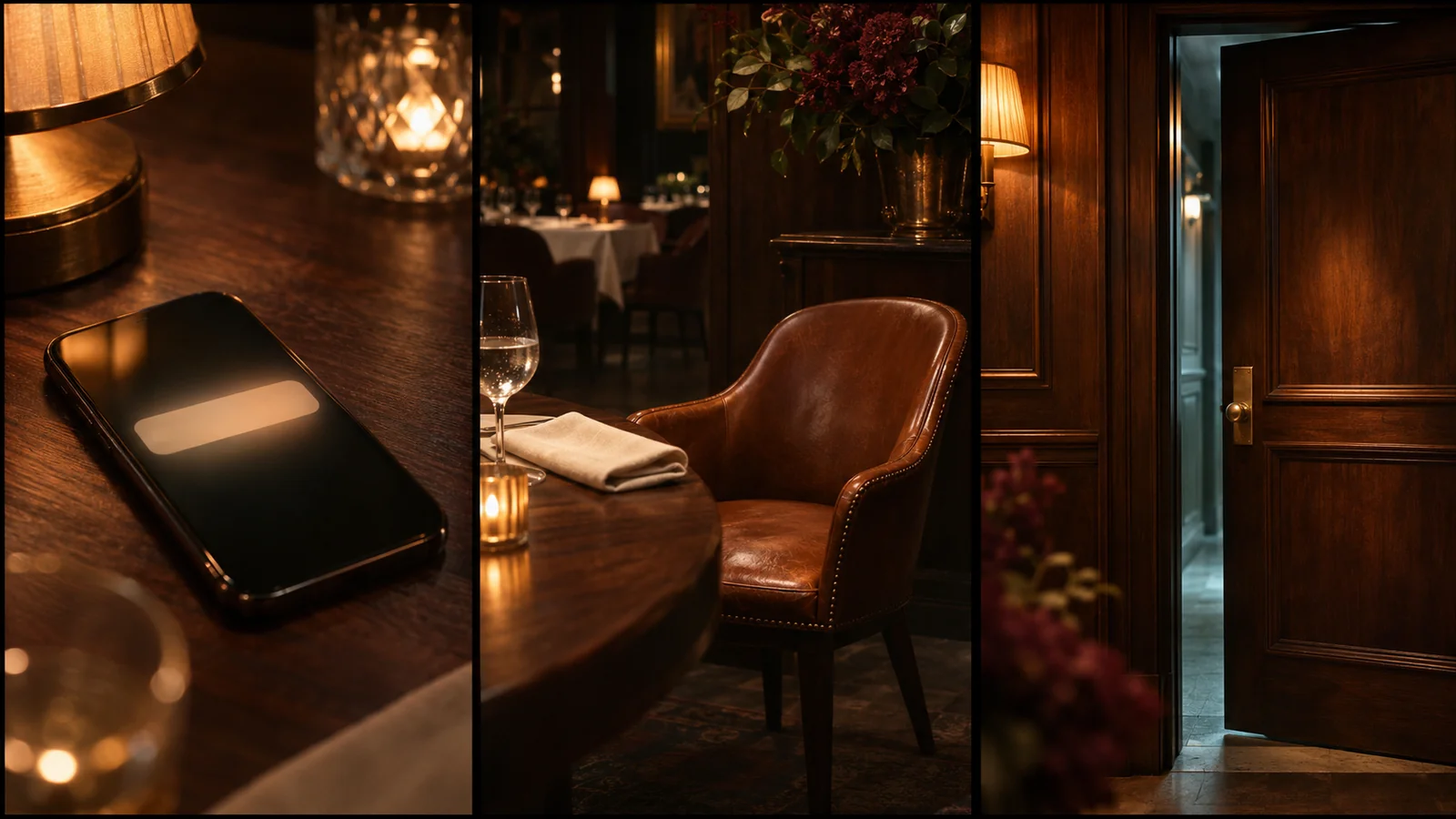
An unanswered message. An empty chair. The art of making the next episode matter.
Original AI-generated conceptual illustration. No unreleased series or characters depicted.
She has spent half the dinner deciding whether to forgive him. Then her phone lights up.
The reservation was for three.
Across the table, he puts down his glass. The chair beside her is empty. At the entrance, the host turns to welcome someone.
The episode ends.
You came for a moment of distraction. Now you want to know who is walking through that door—and why he never mentioned them.
This restaurant scene is an invented editorial example, not a preview of an upcoming SuperReel series.
That continuing structure is central to microdramas. SAG-AFTRA’s guide describes vertical productions as brief portrait-format chapters, using cliffhangers to encourage viewers to continue the story.1 If you are new to the format, our guide to microdramas and short drama series explains how the episodes fit together.
But an unanswered question is a beginning. What makes us care enough to follow it?
First, give us someone to care about
An unexpected guest can make us curious. An unexpected guest arriving during the conversation that might save a relationship gives that curiosity a consequence.
Return to the dinner. She agreed to come because he promised they could finally speak honestly. She chose the restaurant because it was familiar. For the first time in months, she had allowed herself to imagine a different ending.
Now someone else is coming, and he appears to have known all along.
The question has changed. We still want to know who the guest is, but we also want to know whether her trust has been misplaced again. Even before anyone enters, the scene has put something at risk.
At SuperReel, we believe a cliffhanger works best when you care about the person facing the consequences. A secret becomes more interesting when revealing it could change a relationship, a reputation or the future someone thought they had.
The stakes can be intimate. A person deciding whether to stay at a table can hold our attention as completely as someone running toward an exit. What matters is understanding what that decision will cost them.
A strong cliffhanger changes the meaning of the scene
Stopping a video before a door opens is easy. Making us reconsider everything that happened before the knock takes more care.
Perhaps, earlier in the dinner, he moved the spare chair closer. Perhaps he kept looking past her toward the entrance. At the time, those gestures seemed ordinary. After the message, they mean something else.
A useful reveal gives the viewer a new way to understand an old detail. We realise the story has been preparing this moment, even if we did not recognise it yet.
The revelation
A new fact changes what a character believes: the invitation had another purpose, the promise had a condition, or someone knew more than they admitted.
The decision
Sometimes the answer is already clear. The suspense comes from what a character will do with it. Will she leave, ask the question she has avoided, or let the visitor take the empty chair?
The shift in power
The person who seemed in control may suddenly have to explain themselves. One calm sentence can change who gets to set the terms of a conversation.
These endings have different effects. A series can vary them, giving us surprise in one chapter, anticipation in another and a difficult choice in the next.
The most suspenseful line can sound perfectly ordinary
A short episode can make room for a conversation that feels human. The tension often lives in the distance between what someone says and what the other person understands.
Imagine she turns her phone face down and looks at him.
“You said you wanted us to have an honest conversation. Was there a reason you couldn’t tell me who else would be here?”
He glances at the empty chair. “I thought you might not come if I told you.”
“Then you understood exactly why you should have asked.”
We learn something about both people. He has made a decision on her behalf. She recognises it and gives the responsibility back to him. The conversation moves, although neither has raised their voice.
A held look or a pause can deepen that exchange. Music can underline the uncertainty; the sound of a chair moving nearby can interrupt it. Each choice should help us follow the situation.
That is part of the appeal of vertical drama. A portrait frame can bring an expression, a hand and the edge of an empty chair into close relationship. Our guide to vertical storytelling explores how composition and sound make a phone-sized scene feel larger.
The next episode needs to give something back
A good cliffhanger makes a promise. Continuing the story should move us closer to understanding it.
In our imagined dinner, the visitor could be her sister—the person she has refused to speak to for years. The next chapter lets us see her arrive. We have our answer about the third guest.
Now the meaning of the dinner changes. Why has he arranged this meeting? Why did her sister agree to come? And will she stay long enough to hear either of them?
Those are new questions created by an actual development. The story has given us something before asking us to continue.
It could also offer a quieter reward: a long-avoided apology, a character finally setting a boundary, or a moment of tenderness that makes a later separation matter. Suspense has more weight when a story allows us to experience what its characters stand to lose.
For us, that balance matters. Viewers should be able to look back across several short episodes and recognise how the situation has developed, even while the larger story remains open.
What makes a short drama worth another episode?
When you start a new short drama series, notice what it does with your attention:
- You understand what someone wants. Their hope, fear or unfinished conversation gives the scene a direction.
- New information changes the situation. A discovery affects what the characters can do next.
- People behave like the same people from chapter to chapter. A surprising choice still has a reason we can understand.
- The story delivers meaningful moments along the way. Answers, decisions and emotional payoffs give the journey its shape.
These qualities can work in romance, mystery, family drama or a thriller. Some episodes may be urgent and others reflective. A continuing story earns that variation by keeping us invested in the people moving through it.
Short drama cliffhangers: common questions
Why do short dramas end on cliffhangers?
A cliffhanger connects one episode to the next by leaving an important question, decision or event unresolved. It gives the viewer a reason to continue following the same characters. Its impact depends on the stakes established before the ending.
Does every microdrama episode need a shocking twist?
No. Anticipation can come from an honest conversation, an approaching meeting or a choice whose consequences we want to see. Varying the endings gives a series room for tenderness, humour and reflection alongside surprise.
Why can a short drama be hard to stop watching?
Connected episodes can combine curiosity about what happens next with concern for the characters. When each chapter answers something and develops the situation, another episode becomes an appealing way to continue a story you already care about.
The question is what happens after the door opens
We began with a message and an empty chair. By now, the question is larger than who will sit in it.
We want to know whether trust can survive a surprise, whether an old relationship deserves another conversation, and whether the person we have been following will choose to stay.
That is the kind of attention we hope to earn. We’re building SuperReel around continuing vertical stories, consistent characters and cinematic detail, with dialogue that gives relationships room to develop. Our upcoming series are staying under wraps while we prepare for launch.
If you enjoy stories where a glance changes everything, follow SuperReel’s next chapter. Join the launch list below and we’ll email you when the stories are ready.
Source & illustration note
- SAG-AFTRA: The Vertical Programs Agreement—What It Is and How It Works — the mobile portrait format, brief chapters and use of cliffhangers.
Source checked 4 November 2026. The restaurant scene and discussion of storytelling are original editorial material. Images were generated with AI for this article and do not depict SuperReel series, characters or unreleased footage.
Published by SuperReel. How we make our guides and handle corrections.
THE NEXT CHAPTER
Be here when the stories begin.
Get an email when SuperReel launches. Our series are staying under wraps for now.