
Vertical Drama
Explained.
Stories Made for
Your Phone
A different frame. A closer look. How stories come to life on an upright screen.
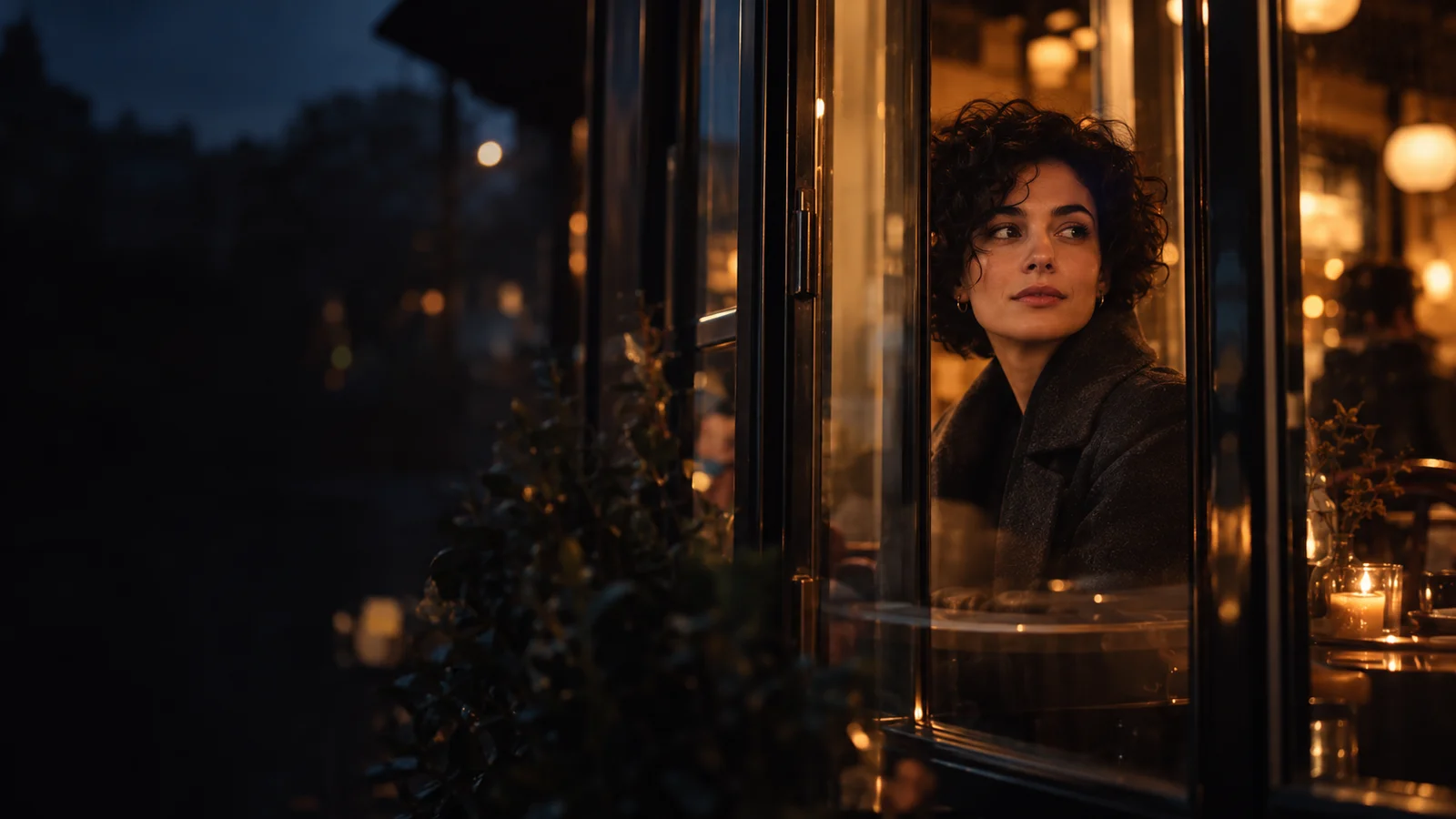
Original AI-generated conceptual illustration. No unreleased series or characters depicted.
A glance across a café. A hand stopping just short of a coffee cup. A face that changes when someone off screen speaks.
None of these moments needs a cinema-sized screen to create tension. They need us to notice the right thing.
That is the creative promise of vertical drama: stories composed for the phone already in your hand, with a frame that can bring a small gesture surprisingly close.
“Vertical” describes the shape of the picture. “Microdrama” describes the compact, episodic way a story unfolds. The formats frequently overlap, but a vertical video could also be a tutorial, a music performance or an advertisement. The story is what makes it drama.
If you are new to the episode format, start with our beginner’s guide to microdramas and short drama series. Here, we will look at something different: what happens when a story is built for a tall screen.
What changes when the screen becomes vertical?
Hold your phone upright and imagine a conversation filling the screen. A face has room above and below it, but less room beside it. A gesture near someone’s chest can share the picture with their reaction. A ceiling light, a staircase or a doorway can become a strong part of the composition.
Turn the same scene sideways and there is more room for people to stand apart, or for a landscape to explain where they are.
Neither shape is automatically more cinematic. Each gives a storyteller a different set of choices.
The numbers are simply a width-to-height relationship: 9:16 means nine units wide for every sixteen high. 16:9 reverses those proportions. Adobe’s vertical-video guidance discusses both adapting footage to portrait frames and the need to think differently about composition.1
A close-up can turn hesitation into the event
Imagine a character being asked an ordinary question: “Are you staying?”
The reply might be a single word. The scene’s meaning could be in the second before it: a breath, a glance at the exit, fingers tightening around a cup.
A close portrait composition can hold those details together. The viewer does not have to search the edge of a wide picture for the gesture that changes the answer.
That intimacy still has to be earned. A screen filled with a face is only a close-up until the character has something to think, feel or conceal.
Why a vertical drama needs more than a crop
Consider this invented café moment. A woman stands at a counter while a server sets down her coffee. In a wide shot, we can see who is serving whom, where the cup is going and how the woman responds.
Now keep only the centre of the same image. Her expression survives. Much of the exchange disappears.

The setting and the exchange share the frame.
The expression stays; context is lost.
A thoughtful vertical version could reposition the server, show the cup entering the foreground, or cut between the handoff and the woman’s reaction. The aim is to preserve what the scene means.
Reframing existing footage can work when the important action remains visible. Planning for portrait from the beginning gives the creator more control over that choice.1
How movement and space tell the story
Once you begin noticing the frame, you can see how a vertical series guides your attention.
Depth can do the work of width
Two people do not always need to stand shoulder to shoulder. One can be close to the camera while the other remains in a doorway behind them. If we can still read both, that arrangement can hold an important relationship inside a tall frame.
Perhaps the person in front thinks they are alone. The background tells us otherwise. The tension comes from where the characters are placed, not from an explanation in the dialogue.
An entrance can change the whole picture
In a narrow frame, someone stepping in from the side can quickly alter a scene. A new shoulder in the foreground can interrupt an apparently private conversation. A hand reaching up from below can reveal an object we had not seen.
But surprise should not make the geography confusing. We still need to understand where people are and what they can see. A clear establishing moment can make a later close-up more powerful.
Action needs room to remain understandable
A vertical drama can include movement, chases and physical conflict. The challenge is to show the essential action without sending it outside the picture.
A wider view, a different camera position or a clean cut may communicate more than several frantic close-ups. A tall frame is a creative constraint, not a reason to abandon clarity.
What makes a phone-sized drama feel cinematic?
For us, the feeling comes from choices that support one another: the light tells us where to look, the performance gives the moment weight, and the sound makes the space believable.
Light can give a small picture depth
A face near a warm café window can separate from a cooler street behind it. A practical lamp can draw attention to a hand, while the rest of the room falls into softer shadow.
The useful question is whether we can see what matters. Darkness without a readable expression or action can hide the story along with the background.
Sound can reveal what the frame cannot
Return to the café. We see one person listening. A chair scrapes behind her. Her eyes lift.
We have not seen anyone approach, but a sound has changed our understanding of the space. Room tone, footsteps and an off-screen voice can make the world feel larger than the picture.
Dialogue still needs to be understandable. Music can build anticipation, but if it swallows a crucial sentence, the next episode may feel confusing rather than intriguing. Captions and accessible playback options can also help viewers follow a story in different viewing conditions.
Four things to look for in a vertical series
You do not need filmmaking vocabulary to recognise when a scene works. Notice what it lets you understand and feel.
- Expressions that mean something. A reaction changes how you understand the conversation, rather than simply filling the screen.
- Details you can follow. When a cup, a key or a hand matters, you have enough time and context to recognise why.
- Space that makes sense. You can follow who entered, who noticed and where the action happened.
- A story that continues to develop. Strong framing supports the characters and their choices. It does not replace a compelling plot.
Those qualities can serve romance, suspense, comedy or a quiet character moment. Vertical storytelling is a way of presenting a story, not a genre of its own.
Vertical drama: common questions
Are vertical dramas and microdramas the same thing?
The terms overlap in mobile entertainment. Vertical describes the portrait picture; microdrama usually describes a story told in very short connected episodes. For example, SAG-AFTRA describes vertical microdramas as short, serialized productions designed for mobile viewing.2
Is vertical drama just a clip from a television show?
It can be an original series composed for portrait viewing. A clip taken from a wider television scene and posted vertically is a different use of the screen, even if both appear in the same feed.
Does a vertical series have to be filmed on a phone?
No. The viewing format does not specify the camera. A phone, a professional camera or a digital production workflow can create portrait images. The important thing for the viewer is how clearly and effectively the finished picture tells the story.
Can a vertical drama show more than close-ups?
Yes. Full figures, architecture, landscapes and action can all appear in a tall composition. A good series varies its shots to suit the moment, rather than treating every scene as a face filling the screen.
A different frame. The same reason to care.
The screen may be tall. The episodes may be short. We still watch because someone wants something, something stands in their way, and we care enough to see what they do.
At SuperReel, we are developing continuous vertical drama with consistent characters and cinematic storytelling. The format gives us an opportunity to make each look, movement and sound part of the experience.
Sources & illustration note
- Adobe: Create vertical videos for social media — portrait framing, composition and adapting footage. This article does not rely on that page’s platform-specific duration limits.
- SAG-AFTRA: The Verticals Agreement — the mobile, serialized vertical-drama format.
Sources checked 1 November 2026. The café example and creative commentary are original editorial material. Illustrations were generated with AI for this article and do not depict SuperReel series, characters or unreleased footage.
Published by SuperReel. How we make our guides and handle corrections.
THE NEXT CHAPTER
Be here when the stories begin.
Get an email when SuperReel launches. Our series are staying under wraps for now.